




On the occasion of Blue March, the national month dedicated to raising awareness about colorectal cancer screening, the Clermont-Ferrand University Hospital (CHU) is intensifying its commitment to the residents of the region. Throughout March, teams are mobilized alongside their partners to inform, support, and encourage colorectal cancer screening.
Each year, more than 47,000 people are diagnosed with colorectal cancer and around 17,000 die from it. It is the second leading cause of cancer‑related death in France, even though it can be cured in 9 out of 10 cases when detected early.
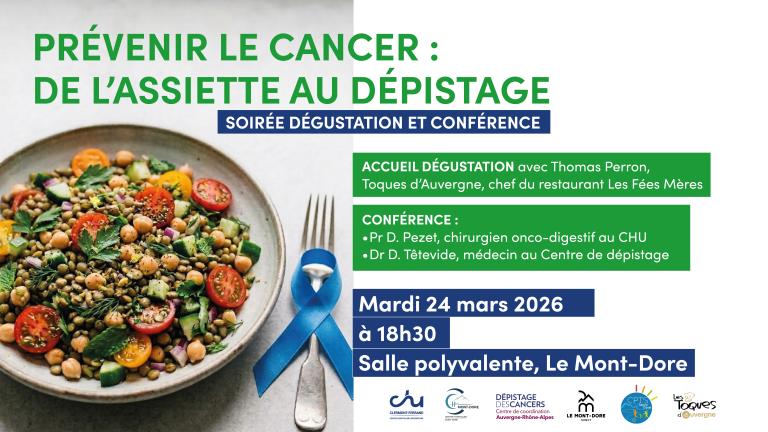
Preventing Cancer: From Diet to Screening’ | Tuesday, March 24 (6:30 p.m.), multipurpose hall of Mont‑Dore
To strengthen prevention efforts in the most vulnerable areas, the University Hospital (CHU) is partnering with the CRCDC ARA and the Mont‑Dore Hospital to raise public awareness during an evening event:
- Thomas Perron, Les Toques d’Auvergne, chef of the restaurant Les Féés Mères, will offer a welcome tasting featuring recipes aligned with nutritional recommendations.
- Prof. Denis Pezet, digestive surgeon specialized in oncology, will speak about the links between diet, health and cancer, as well as other cancer risk factors.
- Dr. Delphine Têtevide, physician at CRCDC ARA, will then explain the importance of organized colorectal cancer screening (ages 50 to 74) and how to access it.
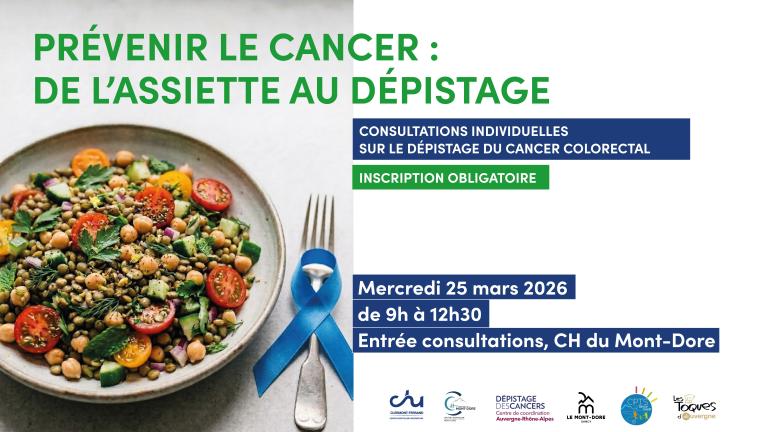
- Individual prevention consultations (by appointment) will be offered by the CRCDC team the following day, Wednesday, March 25 (9 a.m.–12:30 p.m.), at the Mont‑Dore Hospital, with the possibility of picking up a colorectal screening kit and discussing gynecological health (mammography and cervical cancer screening).
Why Mont‑Dore?
Even though the town stands out with a screening rate higher than the departmental average (+35%), its catchment area is part of the territories in the Puy‑de‑Dôme where participation remains among the lowest: under 10% in many municipalities, while the recommended European rate is 45%.
Nutrition, the guiding theme for oncology in 2026
The Clermont‑Ferrand University Hospital (CHU) is placing its 2026 prevention strategy under the theme of diet and nutrition, which can become cancer risk factors when unbalanced. Malnutrition is also a potential warning sign and represents a vulnerability factor during treatment. Nutrition is therefore central to patient care, both before and during cancer treatment.
Building on this observation, the institution invited the association Les Toques d’Auvergne to join its efforts throughout the year. After a first event organized for patients and their caregivers, the association is continuing its support during the initiative planned in Mont‑Dore as part of Blue March.
Additionally, the CHU is taking part in several initiatives led by its partners:
- Participation in the event ‘Eat & Move Against Cancer’, held on Saturday, March 7. At the Marcel‑Michelin Stadium, the Puy‑de‑Dôme Cancer League and its partners organized an afternoon dedicated to prevention, focusing on diet, physical activity, and screening. Healthcare professionals from the CHU were present to answer questions, provide information about screening, and discuss nutrition.
- Blue March Connected Challenge | March 10 to 30. As every year, the CHU is joining the connected challenge organized by CRCDC ARA (Cancer Screening) to encourage physical activity, a major prevention factor. The CHU is mobilizing its teams and inviting its users to participate.
Nationally recognized expertise in digestive oncology
The hospital ranks among the best in France for the management of colon and intestinal cancer, holding 2nd place nationwide in this field (Le Point ranking). This excellence is built on multidisciplinary coordination, recognized surgical expertise, a strong research dynamic, and a well‑structured digestive oncology pathway.
Cancer care represents 25% of the CHU’s activity, of which 20% concerns digestive cancers.
Why is colorectal cancer screening essential?
The data from the French National Cancer Institute speak for themselves:
- Colorectal cancer can grow for a long time without causing symptoms.
- When detected early, it can be cured in 9 out of 10 cases, and treatments are lighter.
- Screening (immunochemical test), sent every two years to people aged 50 to 74, is simple, painless, free of charge, and can be done at home.
This is the strong message that Prof. Denis Pezet, digestive oncology surgeon at the CHU, will deliver during the evening event.Screening remains the most effective action to avoid heavy treatments, reduce the risk of long‑term complications, and save lives. It takes only a few minutes, but it can change an entire life.
So, take the test!