




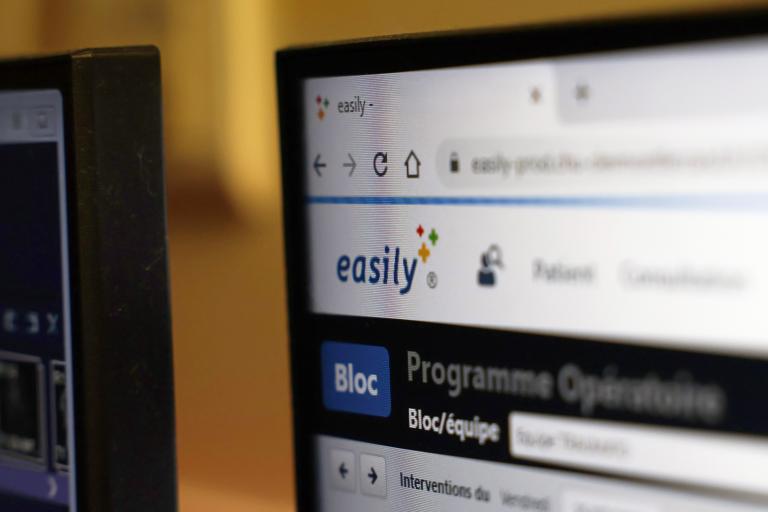
In June 2026, Clermont-Ferrand University Hospital will turn an important page in its digital transformation. With the completion of Phase 1 of the Easily electronic patient record (EPR), a large-scale project launched nearly two years ago is reaching maturity. But this milestone does not mark the end of the project—on the contrary, it opens a new chapter: Phase 2, focused on enhancing the EPR, improving its use, and developing new digital services.
Far more than just an application project, Easily represents a major step forward in structuring the hospital information system. “By unifying practices, strengthening information sharing, and further securing operations, it lays the foundations for a more coordinated, more transparent, and more efficient digital hospital,” explains Grégory Cintas, Director of Digital Services (DSN). A clear ambition emerges: to make digital technology a sustainable lever serving staff, patients, and the challenges ahead.
Phase 1 is coming to an end, and a large-scale project is settling in for the long term
If this deployment is now coming to completion, it is because it has relied on a collective mobilization that is remarkable in its scale. Medical and nursing staff, medical secretaries, managers, medico-technical professionals, administrative personnel, and business representatives were involved at every stage to evolve practices, secure usage, and support the adoption of the EPR as closely as possible to the field.
For several months—and for some teams, nearly two years—this transformation has required sustained commitment. The Easily project teams supported departments from preparation through to operational launch, with training initiatives, change management support, and reinforced assistance during the most sensitive phases. This patient, step-by-step approach has helped embed the project in the reality of hospital practices.
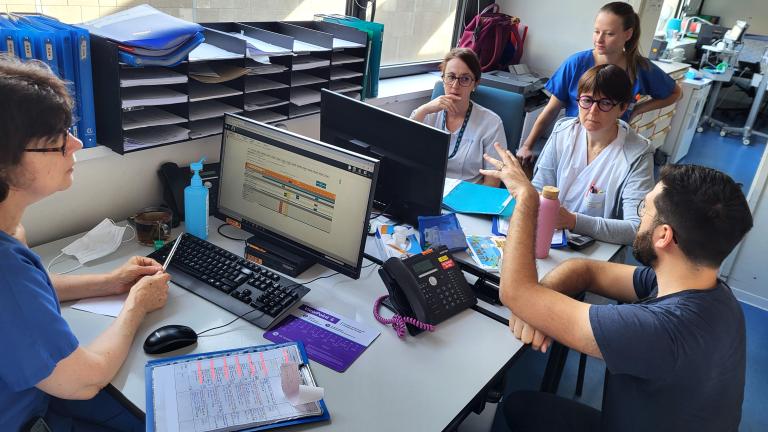
This deployment marks an important milestone in the level of digital maturity achieved by the institution. The Digital Services Department (DSN), working closely with the General Care Coordination, the Medical Information Department (DIM), pharmacy, laboratory, imaging, and numerous business representatives, structured a demanding, secure, and coherent rollout. It was through this close alignment between clinical expertise and digital expertise that the project found its strength.
Grégory Cintas, Director of the Digital Services Department (DSN)The deployment of Easily was a long-term effort, carried out consistently and in close collaboration with departments. This project would not have been possible without the daily commitment of care teams, business representatives, and technical teams, who worked together to evolve both tools and practices.
New modules to extend the transformation
With the completion of the core foundation of the Easily EPR, the University Hospital is entering a new phase. “The challenge is no longer just to deploy, but to amplify the benefits of the project, open up new digital services, and further meet the needs of both professionals and patients,” explains Philippe Petrou, Easily Project Manager.
This Phase 2 will be built around structuring modules designed to strengthen hospital organization, the patient relationship, and operational management.
The patient portal: a showcase for a renewed relationship with users
The patient portal will be one of the most visible markers of Phase 2: it will bring together, in a secure digital space, services that are currently fragmented. It will simplify administrative procedures and make appointment scheduling easier. The portal will also provide more direct access to reports and results, while strengthening secure communication with care teams. Beyond its features, it represents a significant evolution in the patient relationship, with a clearer, more accessible, and more continuous care pathway.
Better bed and patient flow management with EAGLE and GPLH
With the EAGLE and GPLH software solutions, the hospital is equipping itself with additional tools to manage beds and patient flows with greater visibility and responsiveness. They will provide a consolidated, real-time view of hospital occupancy. These tools are intended to help anticipate pressure points, streamline admissions and discharges, optimize care pathways, and strengthen coordination between departments. Although technical in nature, the underlying challenge is organizational: managing daily operations effectively and improving overall performance.
Support for structuring patient pathways
The MOCA module will facilitate tracking key stages of care and coordination between professionals. It aims to standardize certain pathways, strengthen continuity of care, and harmonize medical and clinical practices. Here again, the scope goes beyond the tool itself: the objective is to improve care pathways to enhance consistency, clarity, and quality of care.
Web Santé: strengthening the reliability of activity valuation
Phase 2 also includes the rollout of Web Santé, replacing Cora, to modernize and secure coding and activity valuation processes. The objective is to simplify coding practices, improve the reliability of classifications, enhance the quality of medico-economic data, and facilitate activity monitoring in collaboration with the Medical Information Department (DIM). This initiative extends ongoing work on data quality and medico-economic management within the hospital.
Concrete improvements for professional uses
Alongside the new modules mentioned above, Phase 2 also aims to very concretely improve professionals’ experience in their day-to-day use of the EPR. The goal is to make tools more seamless, more secure, clearer, and better aligned with real-world practices.
Office tools and forms: better supporting daily work
Work will be carried out on medical office tools and forms to simplify professionals’ daily tasks and standardize documents and correspondence. This will help improve data entry ergonomics and provide forms better suited to each specialty. By strengthening the structuring of health data, these developments aim to enhance workflow fluidity, document quality, and the relevance of the information entered into the EPR.
Day hospitals: tools better aligned with operational needs
The planned work around day hospitals (HDJ) addresses highly operational challenges. The objective is to better adapt tools to the organizational constraints of these high-activity units:
- by simplifying certain administrative pathways,
- by optimizing prescription workflows,
- by improving scheduling
- and by better supporting multi-session care pathways.
The aim is to streamline outpatient care and better support teams in their day-to-day work.
Prescribing: improving clarity and safety
The University Hospital will also continue improvements to electronic prescribing, with a clear priority: enhancing ergonomics, readability, and safety at the same time. The objective is to better reflect real clinical and care practices, refine adaptation to professional needs, and strengthen integration with related tools. Ultimately, the goal is to improve everyday usability and efficiency.
Data security: a core requirement of the project
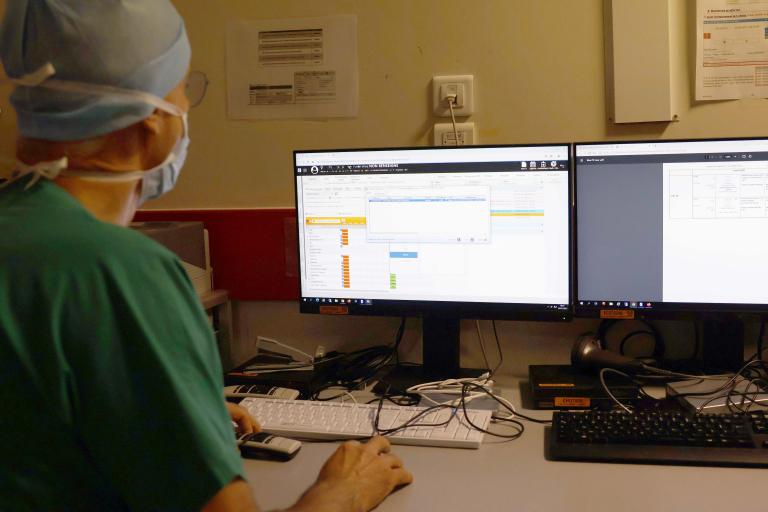
In a context of increasing regulatory and cybersecurity requirements, Phase 2 will place strong emphasis on the auditability of access to the EPR. The planned work will focus on improving traceability of logins and consultations, strengthening access control mechanisms, and facilitating audit and investigation capabilities. This security requirement is central to the project: it aims to build trust in digital usage and ensure a high level of protection for health data.
Generative AI: a field of experimentation for the future
This Phase 2 will also open the door to several experiments involving generative artificial intelligence applied to hospital uses. Possible avenues include support for document drafting, assistance in producing reports, optimization of certain administrative tasks, and better use of data. The objective is not to introduce technology for its own sake, but to identify solutions that are useful, secure, and relevant to support professionals in their daily activities, within an ethical framework aligned with public health requirements.
Grégory Cintas, Director of the Digital Services Department (DSN)With Phase 2, we are changing gears. It is no longer just about deploying a tool, but about making digital technology a lever for organization, innovation, and continuous improvement in support of the hospital.
A recognized collective effort, and a new phase to be launched
The completion of this first phase reflects a large-scale collective effort. It demonstrates the commitment of the professionals involved in a demanding, structuring project that is deeply transformative for the institution. It now opens up a new cycle of development, innovation, and continuous improvement in the service of patients, teams, and overall performance.
Grégory Cintas, Director of the Digital Services Department (DSN)The success of this Phase 1 is first and foremost that of the teams. I would like to thank them for their commitment and availability. For many months, frontline professionals, business teams, and the Digital Services Department have carried out considerable work to make Easily a structuring tool for the hospital. This milestone does not mark an end, but the starting point of a new phase to continue modernizing our institution and addressing the challenges ahead.