




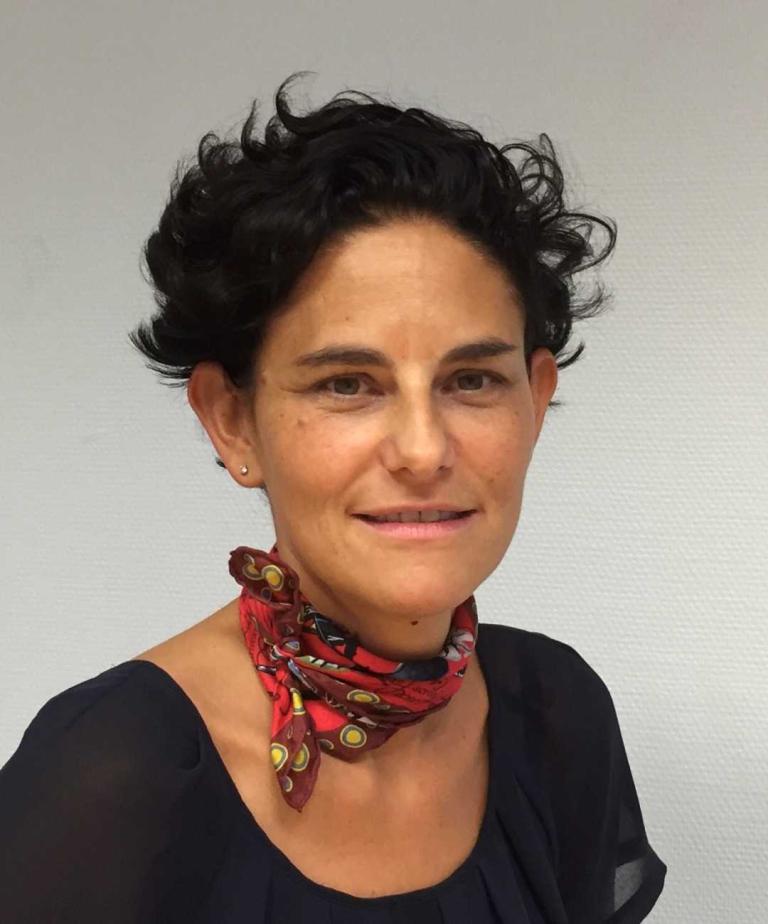
Coming from the University Hospital of Saint‑Étienne, Angèle ROCHEREAU‑BOSSARD took office on 18 June as Executive Director of the HOURAA Healthcare Cooperation Group (GCS HOURAA), which brings together the four university hospitals of the Auvergne–Rhône‑Alpes region. She succeeds Audrey SOKOLO, appointed Director of General and Institutional Affairs at the Hospices Civils de Lyon.
Arriving in March 2021 at the Saint‑Étienne University Hospital, Angèle ROCHEREAU‑BOSSARD held numerous positions within the institution. Director of Communication, Culture and Philanthropy since 2021, she had also been serving since November 2024 as Deputy Director of Human Resources, after previously working as Deputy Director of the Hospital‑University Division for Medicine and Oncology. Actively involved in developing the hospital’s institutional project as supervisor of the strategic initiatives, she also led steering committees on end‑of‑life care and management practices.
After four years in Saint‑Étienne, she was appointed on 18 June as Executive Director of the GCS HOURAA and moved to Lyon, where the headquarters of the Healthcare Cooperation Group is located. She succeeds Audrey SOKOLO, who had held the position since 1 November 2023 and was recently appointed Director of General and Institutional Affairs at the Hospices Civils de Lyon.
Implement joint actions in the fields of research, education, and healthcare.
The Executive Director is the operational lead for the initiatives and projects carried out by the GCS, whose Administrator, since 20 February 2024 and for a three‑year term, is Raymond LE MOIGN, Director General of the Hospices Civils de Lyon.
Created in 2012, the HOURAA Healthcare Cooperation Group (GCS HOURAA) brings together the four university hospitals of the Auvergne–Rhône‑Alpes region: the University Hospitals of Clermont‑Ferrand, Grenoble Alpes, Lyon, and Saint‑Étienne. These four institutions comprise 22 hospital sites, 11,150 beds and care places, 48,000 professionals, and account for more than 5,626 scientific publications.
The primary mission of the GCS HOURAA is to strengthen cooperation among the four university hospitals, as well as with the regional faculties of medicine, pharmacy, and dentistry, in order to define and implement specific joint actions in the fields of research, education, and healthcare, in coordination with the Regional Health Agency.
The GCS HOURAA is structured around four thematic committees, aligned with the Group’s strategic priorities, each led by a different university hospital:
- The Clinical and Specialized Medicine Committee, led by the Saint‑Étienne University Hospital
- The Research, AI, Health Data, and Innovation Committee, led by the Hospices Civils de Lyon
- The Educational Innovation / Health Studies Reform Committee, led by the Grenoble Alpes University Hospital
- The Medical Demography and Foresight Committee, led by the Clermont‑Ferrand University Hospital
Among the major initiatives led by the GCS HOURAA:
- The DataHubHouraa (D2H) project, which aims to create a regional health data hub. This project was selected as part of the BPI France call for proposals dedicated to the development of health data warehouses;
- The establishment of the Auvergne–Rhône‑Alpes Regional Palliative Care Coordination Unit, developed in partnership with a collective of palliative care professionals and accredited by the Regional Health Agency;
- The participation of the four university hospitals, under GCS HOURAA coordination, in ARS consultations concerning both the revision of the Regional Health Plan and the regional implementation of the national programme for the collection and transplantation of hematopoietic stem cells, as well as the programme for organ and tissue procurement and transplantation.
- Under the aegis of the GCS HOURAA, the four CHUs also responded to an ARS ARA call for projects aimed at digitising anatomical pathology. With the support of the Regional Health Agency, digital pathology is now being deployed: the glass slides produced in the four laboratories will be scanned using slide scanners and analysed not through a microscope but on a computer screen. This will help improve diagnostic and care quality, increase efficiency, and open new prospects for strengthened regional collaboration in the use and exploitation of the resulting data.